Habits · Self-awareness / 6 min read
Small Changes for a More Harmonious Home and Mind
Begin with one ordinary point of friction. A small adjustment to a room or a daily response can give you something useful to observe.
Choose a question rather than a makeover
You may not need a new routine, a new room and a new set of storage boxes. You may need somewhere to put your keys, a less glaring lamp or a clearer way to ask for help. Start by naming one difficulty that occurs often enough to notice. Make it concrete: "I cannot find my bag in the morning" is easier to work with than "my life feels disorganized."
This guide combines practical experiments with reflection. Traditional Feng Shui can encourage attention to how a space is arranged, but a useful change does not prove a traditional claim about energy or fortune. Similarly, a short exercise about thoughts is educational; it is not a mental-health assessment or treatment plan.
1 Give arrival a little structure
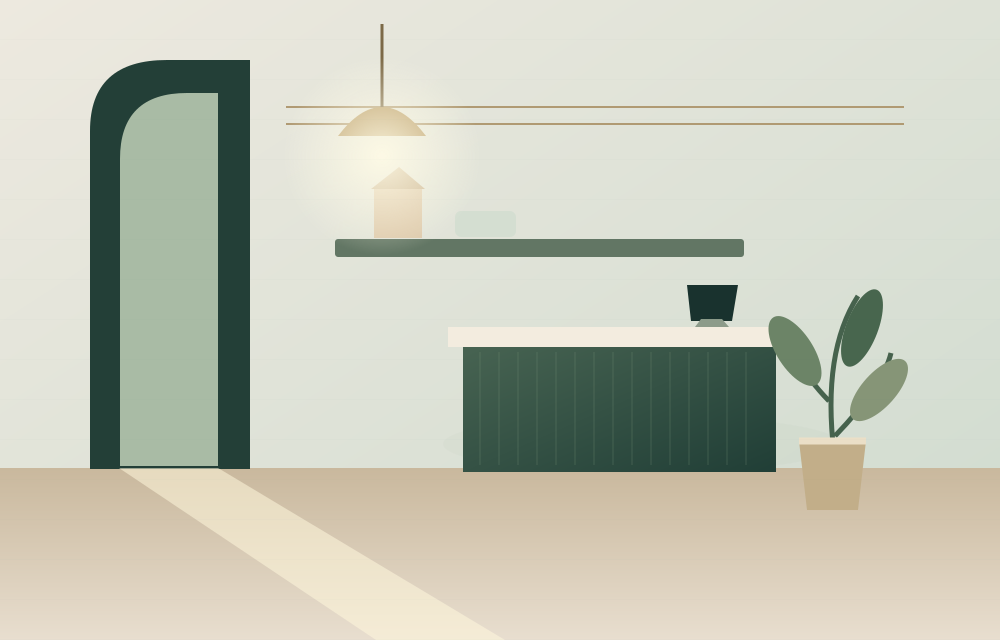
Walk through the entrance carrying what you normally bring home. Notice where you stop and what you put down. Choose one place for an item you regularly lose. It should be reachable and convenient, not simply attractive in a photograph.
Try the arrangement for a few ordinary days. If you still leave the item somewhere else, that may reveal a better location. Ask before reorganizing a shared area. Keep exits and walking routes clear, and make space for mobility or care equipment before adding decoration.
2 Make one surface serve one task
Pick a surface where you eat, work or prepare for the day. Remove just enough unrelated material to do that task comfortably. Put unfinished decisions somewhere you can return to them rather than hiding them in a drawer and hoping they disappear.
This is not a rule that every room must be minimalist. A lively home can contain books, projects and sentimental objects. Judge the arrangement by whether it supports the people who use it. If keeping one clear surface takes too much effort, reduce the size of the experiment.
3 Observe light from your actual position
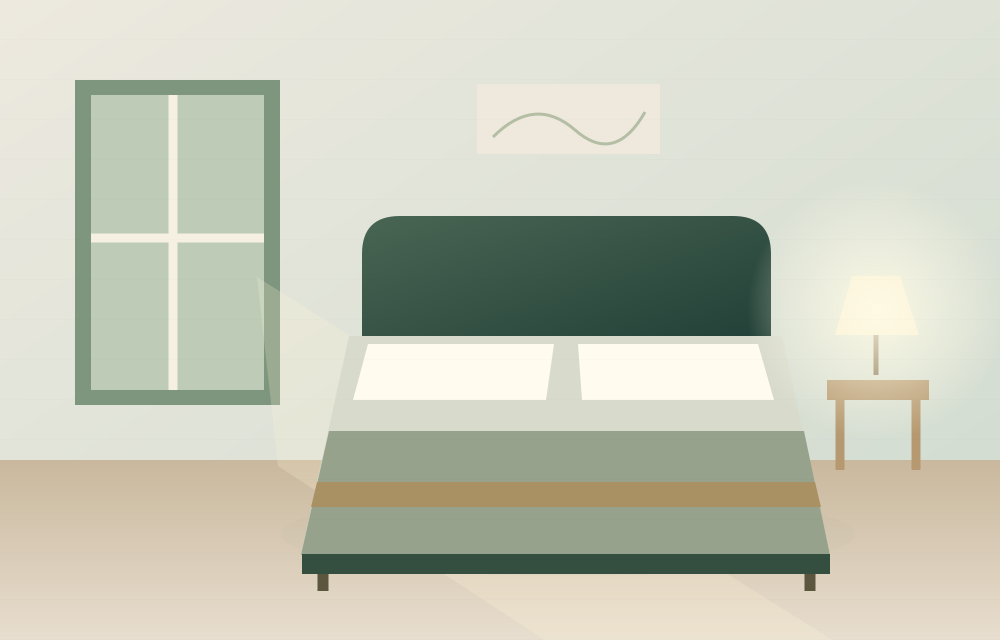
A lamp that looks pleasant from the doorway may reflect into your eyes when you sit down. Check lighting at the desk, dining surface and bedside. Adjust what you can safely move, then notice whether reading or resting feels less awkward.
Workstation guidance recommends managing glare and reflections. [5] You do not need a claim about energy to explain why an irritating reflection is worth addressing. Keep enough light for safe movement and avoid unstable improvised fixtures. Where you cannot control the main lighting, a small change in seating position may be worth trying.
4 Mark the end of the working day
If home and work share a room, choose a small closing action. Put the current papers in a tray, write tomorrow's first task, or close the work screen when your responsibilities allow. The aim is to make the transition visible, not pretend that unfinished work has vanished.
A shared home needs negotiation. One person's quiet evening may be another person's working hours. Ask what arrangement is realistic for both of you. Sleep guidance supports regular routines and a comfortable sleeping environment, but those ideas need to be adapted to the life you actually lead. [3]
5 Put words around an emotional moment
When something bothers you, try three short notes: what happened, what I think it means, and what I feel pulled to do. For example: "The plan changed; I think my time does not matter; I want to stop replying."
Separating these parts gives you room to check the interpretation. The NHS recommends examining evidence when a thought is unhelpful. [9] You might still conclude that a pattern is disrespectful. The exercise does not require you to replace an uncomfortable reality with a cheerful story. It simply helps you identify which parts you know and which you are assuming.
6 Ask for one specific change
A practical request is easier to discuss than a general accusation. "Could we put the keys here so we both know where they are?" describes an arrangement. "You always make everything chaotic" invites an argument about character.
The same approach can help with plans: "Can we agree on a time by tomorrow?" The answer may be no, or a different suggestion. Listen for what is workable. Research on conflict communication emphasizes context rather than a universally successful formula. [8] A calm script cannot guarantee cooperation, and you do not have to soften a serious concern until its meaning is lost.
7 Make the action small enough to repeat
Choose a natural reminder, such as arriving home or closing your laptop, and pair it with one manageable action. Research on everyday habit formation examines repeated behavior in a consistent context. [10] It does not say that a relationship or emotional pattern will change after a fixed number of days.
If you miss the action, resume when it makes sense. Ask whether the reminder was obvious and the action realistic. This is more useful than treating a missed day as evidence that you lack discipline. Some changes also require another person's cooperation or resources you do not currently have.
Review without giving yourself a score
After a week, ask what became easier, what stayed the same and what became harder. Keep, adjust or stop the experiment. A simpler entryway may help while a detailed journal feels burdensome. You are allowed to choose differently.
Start with one environmental adjustment and, if you wish, one reflective question. There is no requirement to earn a harmonious home through perfect habits. Persistent sleep difficulties or emotional distress deserve appropriate professional support; threats or coercion require attention to safety, not just better communication.
Your next step: write one sentence beginning "This week I will try..." and one beginning "I will know it is useful if..." Visit martinainc.com for current resources. These suggestions are general education and practical experiments, not guarantees about wellbeing or substitutes for professional care.
Sources & reading notes
References checked 5 October 2026. Examples and exercises are original Martina Inc. educational material.
- Centers for Disease Control and Prevention — About Sleep
Public-health guidance on regular sleep routines and a comfortable, quiet bedroom.
- Occupational Safety and Health Administration — Computer Workstations: Workstation Environment
Practical guidance on glare, lighting, ventilation and workstation surroundings.
- Overall and McNulty (2017) — What Type of Communication during Conflict Is Beneficial for Intimate Relationships?
Communication effects depend on context; no universal script guarantees a good outcome.
- NHS Every Mind Matters — Reframing unhelpful thoughts
Checking interpretations against evidence; a source for general education, not a diagnosis.
- Lally and colleagues (2010) — How are habits formed: Modelling habit formation in the real world
Research on repeated everyday behavior in a consistent context; not a study of changing relationship patterns.