Feng Shui · Everyday spaces / 6 min read
Your Bedroom: Feng Shui, Bed Position & Better Rest
Explore traditional arrangement ideas while keeping sleep guidance, comfort and safety in view. A room can support rest without following every design rule.
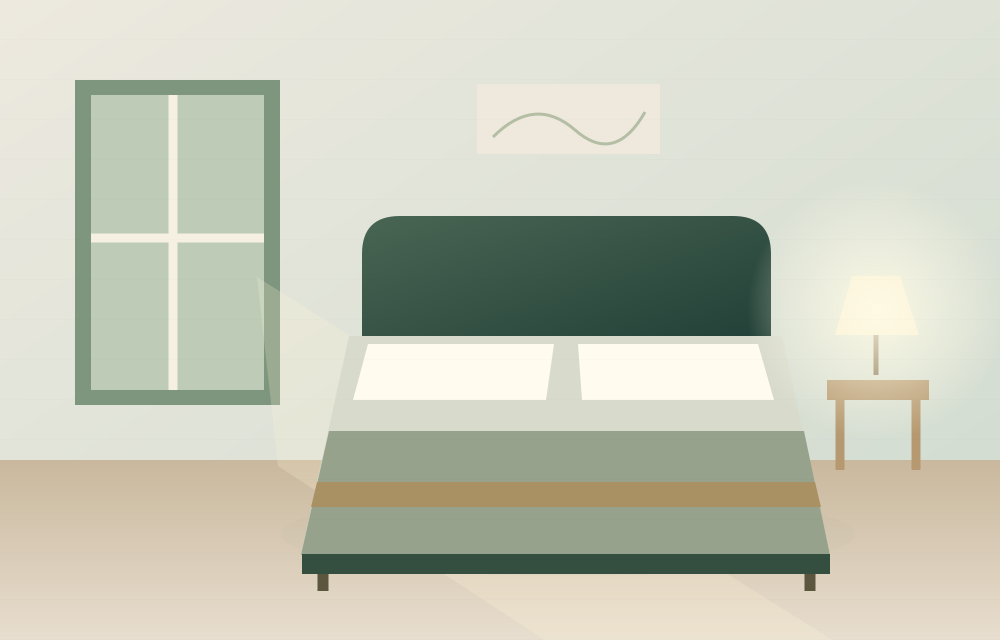
Start with the room you actually have
A bedroom may also hold your desk, a child's belongings, medical equipment or most of your storage. A useful guide should work with those realities. Begin by asking what interrupts rest or makes the room harder to use. Is it a bright reflection, an awkward route to the bathroom, a pile of work beside the pillow or a disagreement about noise?
You do not need to solve every issue before making a small improvement. Choose one you can safely change without spending money. If someone shares the room, ask about their experience too. A space that looks calm in a photograph may not meet both people's needs.
Understand the traditional bed-position idea
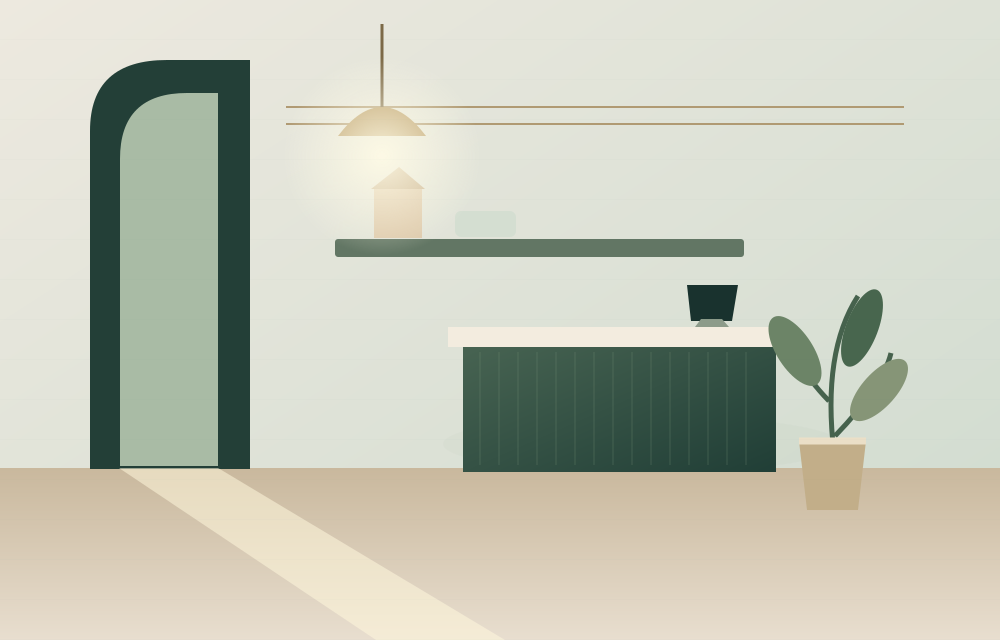
Many Feng Shui practitioners discuss a command position: the bed is arranged so the person can see the entrance without being directly in the doorway's line. Anjie Cho's practitioner guidance describes this door-visibility principle. [11] This is a traditional arrangement idea, not a clinically established treatment for insomnia.
Imagine the view from the pillow rather than judging the room only from its entrance. Can you move around the bed without squeezing past unstable furniture? Can you reach what you need at night? Sketch possibilities before lifting anything. Keep door swings, safe exits, ventilation and necessary equipment clear. If your room offers only one workable bed position, that does not mean it is harming your future.
Do you need a particular sleeping direction
Some Feng Shui methods consider compass orientation and personal calculations; their recommendations are not identical across schools. [2] It would be misleading to give every reader a single best direction without specifying a method or its limits.
This guide does not calculate a personal direction or claim that north, south, east or west will cure poor sleep. If a traditional direction matters to you, treat it as an optional cultural preference alongside your practical needs. Do not move a bed into glare, a blocked exit or an uncomfortable position simply to satisfy a compass rule. Traditional preference and sleep-health advice should remain clearly identified as different kinds of guidance.
Make mirrors an observation rather than a fear
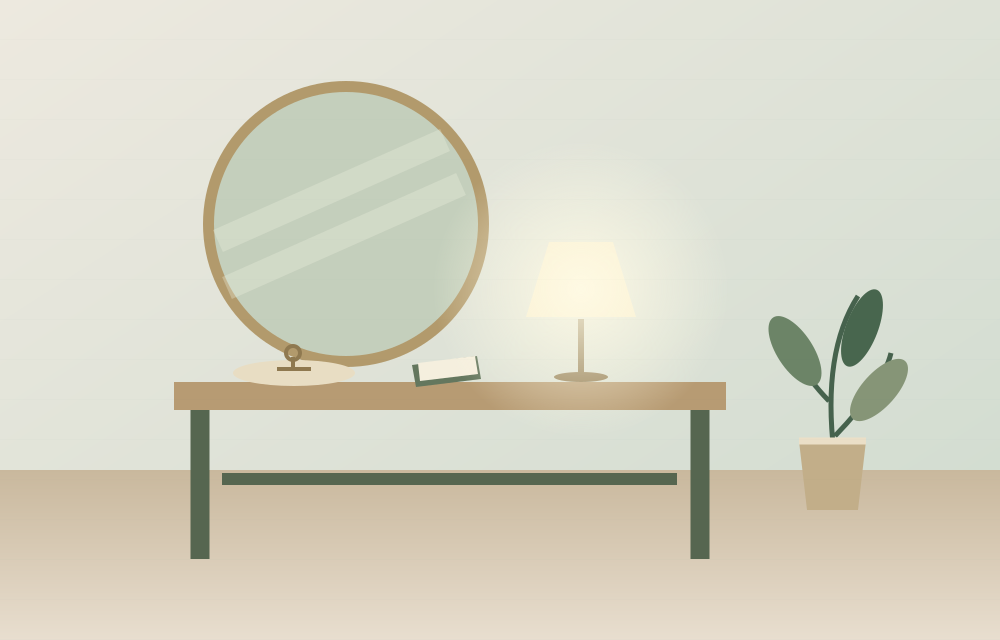
Mirrors are discussed differently in different Feng Shui approaches. In an everyday bedroom, the useful question is what the mirror actually reflects. Does it catch a hallway light? Does a moving reflection bother you at night? Does its position make dressing easier in the morning?
If something about the reflection is distracting, try a safer angle or a different position and notice whether that helps. Secure heavy mirrors appropriately. Do not treat a mirror as proof that a relationship will fail, or buy an object because a frightening claim says it is essential. Your own comfort is a reasonable practical consideration without attaching a prediction to it.
Use balance without requiring symmetry
Two identical bedside tables are not necessary for a caring relationship or a restful room. Visual balance might mean distributing bulky objects more evenly or leaving one surface simpler. Functional balance means people can reach what they need and have some say in the space.
Discuss light, storage and access when the room is shared. One person may need a lamp or assistive equipment that does not match the other side. The goal is a workable arrangement, not symmetry at the expense of comfort. Avoid moving or discarding another person's possessions in the name of improving the room.
Give clutter a practical definition
A useful distinction is between possessions and obstacles. Books, sentimental objects and clothes do not automatically make a room unhealthy. A stack that falls into a walkway or a surface so crowded that you cannot find medication is a concrete problem worth addressing.
Pick a limited area, such as the route from bed to door or the place where tomorrow's work sits. In a studio, placing work materials in a tray at the end of the day may help separate activities without pretending that you have a second room. Keep essentials visible or reachable if that makes life easier. Do not replace an effective personal system with a tidier-looking one that you cannot use.
Separate sleep guidance from Feng Shui
Public-health guidance gives a different basis for everyday sleep choices. The CDC recommends regular sleep and wake times and a quiet, relaxing room at a comfortable temperature. It also advises switching off electronic devices before bedtime. [3] These recommendations do not depend on a compass direction.
You could begin by reducing an unnecessary source of evening light or agreeing on a quieter wind-down period. Retain enough lighting for safe movement, especially if darkness makes falls more likely. Consider what is feasible around shift work, caregiving or shared housing. A routine that fits your life is more useful than an ideal you cannot maintain.
Try one change and keep its limits in view
For several nights, note one change and how the room felt to use. You might record bedtime, waking time and a brief comment on rest, along with unusual noise or schedule changes. One unusually good or bad night cannot establish what caused it. If tracking makes you anxious, simplify it or stop.
Persistent insomnia may require treatment; the NHLBI describes cognitive behavioral therapy for insomnia among the available approaches. [4] Ongoing sleep difficulty, breathing problems during sleep or daytime sleepiness are reasons to seek professional advice. Bedroom styling cannot replace that care.
Your next step: choose one practical irritation and one reversible change. Visit martinainc.com for current educational resources. This article offers general education and traditional context, not diagnosis or individualized sleep treatment.
Sources & reading notes
References checked 5 October 2026. Examples and exercises are original Martina Inc. educational material.
- International Feng Shui Guild — Feng Shui Glossary
Practitioner terminology and variation among traditions; not scientific validation. No definitions or diagrams reproduced.
- Centers for Disease Control and Prevention — About Sleep
Public-health guidance on regular sleep routines and a comfortable, quiet bedroom.
- National Heart, Lung, and Blood Institute — Insomnia: Treatment
Persistent insomnia may need treatment; general bedroom changes do not replace clinical care.
- Anjie Cho — Feng Shui for Your Bedroom
Practitioner account of the traditional command-position idea; metaphysical and health claims on the page are not adopted.